Manufacturing & Engineering
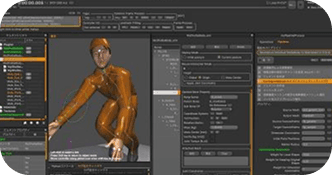
Digital Human Based Ergonomics Design Studio
The Challenge
Why this was hard
The studio simulates the human body. Teams use it to edit and display 3D meshes and skeletons, generate human models, reconstruct postures and run ergonomic assessments, with collision detection throughout. It was ageing, though. Rendering ran on the legacy OpenGL fixed-function pipeline, which capped visual quality. The collision detection library was written in CUDA, so it only ran on NVIDIA hardware. And the tool was desktop-only.
Our Solution
How we solved it
We moved the renderer to the modern programmable pipeline and rewrote its shading in GLSL, which brought a big step up in rendering quality and visual detail. We rebuilt the high-performance collision detection library on OpenCL, so it now runs on any platform without losing speed. Finally, we ported the whole system to iOS and optimised it there.
PROGRAMMABLE GLSL RENDERING, CROSS-PLATFORM COLLISION DETECTION & iOS SUPPORT bring the studio up to date
Technologies Used
The stack behind it
Result & Impact
What came out of it
The studio now renders sharper, more realistic digital humans and runs on any GPU platform. It also reaches iOS devices. Design teams in many industries can test ergonomics earlier and on more hardware.
Start a conversation
What would you like to build?
Bring us your brief. Let’s explore what we can make together.
Colombo · Singapore · Working with teams worldwide
Our Expert Team
Ready to bring your vision to life